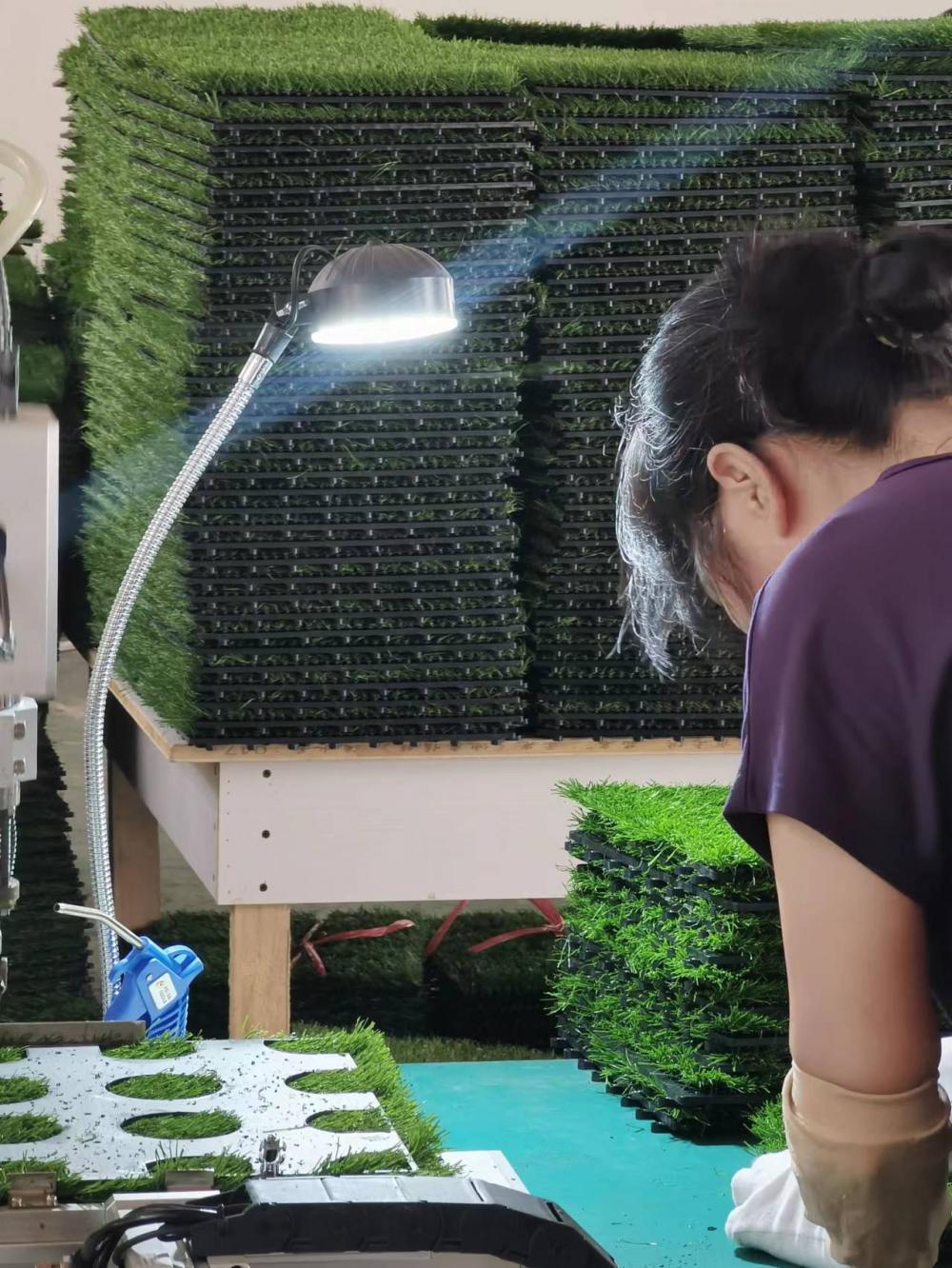
The main advantages of artificial grass are anti-aging, sunscreen, waterproof, anti-skid, wear-resistant, comfortable feet, bright color, long service life, no need to invest a lot of maintenance costs, and all-weather use.
Specifically, it includes:
1. Has good elasticity and sufficient cushioning force.
2. Breathable and permeable.
3. Significantly reduce maintenance costs, especially in compliance with urban water-saving requirements.
4. Meet environmental requirements, and the lawn layer can be recycled and reused.
5. Increase the exercise area, reduce the noise on the playground, and have the function of shock absorption and pressure reduction, which meets the requirements of open teaching.
7. Silver white quartz sand or colored sand is used to fill, so that Student activism will not pollute their clothes and environment during sports, and all markings on the playground are directly woven, so that they will not be bothered by frequent marking.
8. Economical and practical, one investment can ensure a service life of over seven years, with almost no subsequent maintenance costs.
9. Short construction and installation period, quick results. Activities.
Artificial grass has overcome several main difficulties of natural grass: firstly, it cannot grow under extreme climatic conditions; Secondly, some countries and regions are unable to afford high maintenance costs due to economic reasons; Thirdly, it is not possible to plant in some sports venues with roofs. In addition to these, artificial grass also has the characteristics of high frequency of use, easy paving, simple maintenance, and fast drainage. These advantages make artificial grass have broad development space, and there is a great trend to replace natural grass!
According to statistics, there are 600 standard artificial Caochangdi in the United States, 150 in Germany, 150 in Japan, 100 in the United Kingdom, and 500 in China every year, not including a larger number of non-standard fields. Artificial grass has formed a huge market.